October 30, 2026
How a Pizza Restaurant Serves Both Classic and Creative Palates
By @claytononue421
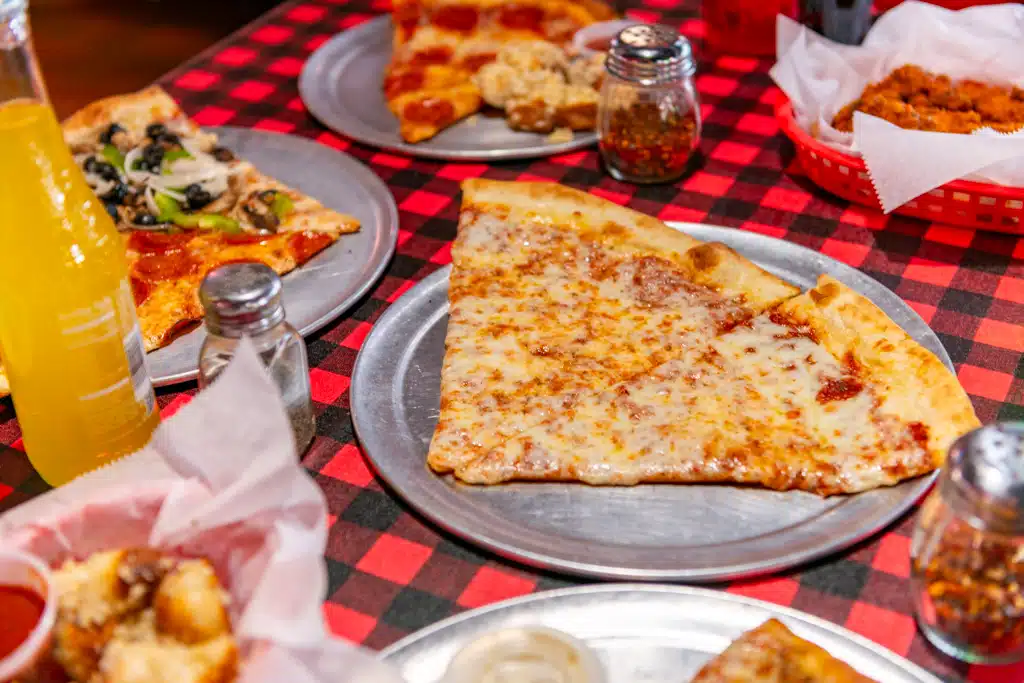
A good pizza restaurant does not choose between tradition and invention. It learns how to hold both in the same oven.
That balance sounds simple from the dining room. It is not simple in the kitchen, on the menu, or at the ordering counter on a Friday night when one table wants a textbook margherita and the next wants hot honey, roasted fennel sausage, pickled onion, and a drizzle of Calabrian chili oil. Serving both groups well takes more than a broad topping selection. It demands discipline, restraint, and a clear point of view about what pizza should be.
The restaurants that manage this well tend to understand one core truth. Guests do not divide neatly into "traditional" and "adventurous." Most people move between those moods. A family may order a plain cheese pie for the kids, a pepperoni for the grandparents, and one seasonal special for the table because somebody is curious. A regular who swears by a classic red pie most of the year may branch out the moment local corn arrives in late summer or wild mushrooms show up after the first cold snap. The best operators build a menu for that reality rather than for a false either-or.
The classics are not filler, they are the test
Every pizza restaurant talks about creativity now. Fewer are willing to admit that the most revealing order on the board is still plain cheese.
A classic pie leaves nowhere to hide. If the dough lacks fermentation, you taste it. If the sauce is too sweet, too thin, or over-seasoned, it announces itself immediately. If the mozzarella releases excess moisture, the center puddles. If the bake is rushed, the crust turns pale and soft rather than crisp and structured. A wild topping combination can distract from those flaws. A simple pie cannot.
That is why serious pizza places treat the classics as their standard, not their backup plan. Cheese, margherita, pepperoni, mushroom, sausage, and a white pie with garlic or ricotta are more than menu staples. They are the foundation that tells guests whether the restaurant knows its craft. Many customers never order beyond those categories, and they should not feel like they are settling for the safe option. In a strong operation, the classics get as much thought as any chef-driven special.
This often shows up in small choices that matter more than novelty ever will. The tomato base might be uncooked to preserve brightness, or briefly simmered to round out acidity, depending on the dough style and oven characteristics. Pepperoni may be selected for cup-and-char performance rather than price. Basil may be added after the bake on one pizza and before the bake on another because each approach creates a different result. These are not dramatic decisions, but they are the work.
When guests trust a restaurant’s classics, they are more willing to experiment elsewhere on the menu. Trust is the bridge between familiar and creative.
Creativity works best when it grows from the same foundation
Innovation in pizza gets dismissed when it feels random. That criticism is often fair. There is a difference between a thoughtful seasonal pie and a topping stunt built for social media. Guests can tell.
The successful creative pizza usually begins with the same questions a cook asks of a classic pie. What is the base? How wet are the toppings? Where is the fat? Where is the acid? What ingredient carries the aroma? What will happen in a 700 degree oven versus a deck oven? Will this combination still taste balanced after a ten-minute drive in a takeout box?
Those practical questions separate ideas that sound exciting from pizzas people actually reorder.
A chef might love the idea of fresh peaches, prosciutto, stracciatella, and basil. On paper it sounds elegant. In service, ripe peaches can dump water into the center, prosciutto can become leathery if baked too long, and a generous spoonful of stracciatella can cool the surface too quickly. To make the pizza work, the team may need to roast the fruit first, add the cured meat after baking, and use a restrained hand with the cheese. Creativity survives only if technique supports it.
The same principle applies to bolder profiles. A pie with spicy lamb sausage, smoked yogurt, cilantro, and pickled shallot can be excellent, but only if the restaurant understands its own dough and heat. Lamb fat renders differently than pork. Yogurt behaves differently than mozzarella. Pickled onions add brightness but can dominate if the dough itself already has pronounced sourness from long fermentation. Good creative cooking is not simply adding unusual ingredients. It is understanding how those ingredients behave on pizza.
Guests may not describe it this way, but they recognize the difference instantly. They know when a pie feels composed rather than crowded.
Menu design is where the compromise either works or collapses
Many pizza restaurants fail at this balance before the first dough ball is stretched. They build menus that are either too narrow to invite curiosity or too sprawling to maintain quality.
A practical menu has a recognizable center. There should be a clear lane for the person who wants certainty and another for the guest who wants discovery. Those lanes can overlap, but they must both feel intentional. If every pie leans experimental, the restaurant risks alienating diners who simply want a dependable pepperoni. If every pie looks interchangeable except for a token monthly special, the menu may feel safe to the point of boredom.
One approach that works especially well is to anchor the menu with a compact group of classics and then rotate a few seasonal or house-signature pies that show personality. This structure tells the customer two useful things at once. First, the restaurant respects the canon. Second, it has ideas worth trying.
Language matters here more than many operators realize. Overwritten menu copy can make creative pizzas sound precious. Underwritten copy can make them sound confusing. Guests need enough information to understand a pie quickly, especially in a busy dining room or online ordering environment. "Roasted mushrooms, fontina, thyme, garlic cream, lemon zest" is usually better than a paragraph about forest aromas and artisan inspiration. Precision sells better than performance.
There is also a pricing element. Classics often set customer expectations, and specialty pies must feel meaningfully different if they carry a noticeable premium. People will pay more for ingredients that clearly cost more or require more labor, but they resent inflated pricing for novelty alone. A pizza restaurant that wants adventurous orders needs guests to feel that experimentation is worth it, not risky.
The dough has to welcome both restraint and excess
Dough style influences how wide a menu can stretch without losing coherence. This is one of the least appreciated parts of the conversation.
A delicate Neapolitan-style dough, blistered and soft, excels with modest topping loads and clean flavor combinations. It can absolutely support creativity, but it does not welcome heavy-handedness. Piling on thick sauces, wet vegetables, and multiple cheeses often crushes its structure. By contrast, a New York-style crust, with more tensile strength and a crisper base, can tolerate a broader range of toppings without falling apart. A pan pizza or Sicilian format opens another set of possibilities entirely, especially for richer flavor profiles and textural contrast.
That does not mean one style is better at serving classic and creative palates. It means the menu should respect the architecture of the crust. Restaurants get into trouble when they ignore this. A team may love the idea of offering a dozen inventive combinations, but if the dough cannot carry them, the guest experiences the result as soggy, greasy, or clumsy.
Some of the smartest menus I have seen use different formats to solve this problem. A restaurant might keep its round pies rooted in classic combinations while using square slices, grandma pies, or limited specials to explore seasonal ideas that need a sturdier platform. That lets the business protect the integrity of its signature style while still giving the kitchen room to play.
It also helps with customer psychology. A diner may hesitate to commit to a full large pie topped with something unfamiliar, but gladly try a square slice or a smaller format as a low-risk entry point. Good restaurants understand that curiosity often needs a practical invitation.
Familiar flavors are often the best doorway to creativity
When a pizza restaurant wants to expand a customer’s palate, the smartest move is rarely the most extreme one. It is usually a pie that https://troyyorb279.clearhavendigest.com/posts/what-every-food-lover-should-know-about-a-pizza-restaurant feels half-familiar and half-new.
Think of a white pizza that starts with roasted garlic, mozzarella, and ricotta, then adds charred broccoli and lemon. Or a pepperoni pie sharpened with hot honey and pickled jalapeño. Or a mushroom pie lifted by taleggio and sage. None of these combinations asks the guest to abandon the basic language of pizza. They simply deepen it.
This is how many restaurants gradually build a culture of exploration. They do not force diners into culinary cliff jumps. They offer stepping stones. A customer who orders sausage and peppers today may try fennel sausage with peppadews next time. Someone devoted to margherita may branch into burrata and blistered tomato when the season is right. Familiarity lowers resistance.
There is also wisdom in drawing from local food memory rather than from novelty for its own sake. If a restaurant is in a region where sweet corn, smoked meats, garden tomatoes, or pickled vegetables are part of the broader dining culture, those ingredients can make a creative pizza feel grounded rather than gimmicky. People respond to flavors that connect to place. A seasonal pie with local corn, scallion cream, bacon, and pecorino can feel both original and instantly understandable.
The strongest menus often reflect that kind of restraint. They may be imaginative, but they are rarely trying to prove how imaginative they are.
Service is part of the flavor
A menu alone cannot serve both classic and creative palates. The front-of-house team has to know how to guide people without sounding pushy or overly rehearsed.
This matters more in pizza than some operators assume because pizza is both everyday food and occasion food. Guests arrive with very different expectations. One person wants a quick, comforting dinner after work. Another is on a date and wants something memorable. Another is bringing out-of-town friends and wants to show off the restaurant’s personality. The staff needs enough product knowledge to read the table and make useful suggestions.
That usually means understanding more than ingredients. The server or counter staff should know which pizzas eat richest, which have more heat than the description implies, which travel well for takeout, and which are best shared alongside a salad or lighter starter. They should also know how to translate the kitchen’s creativity into plain language. "It’s our white pie, but brighter and sharper because of the lemon and chili" is often more helpful than reciting every component.
A small anecdote from restaurant life captures this well. In many dining rooms, the order that unlocks the table is not the obvious special but the recommendation framed with confidence and context: "If you want one classic and one creative, I’d do the margherita and the mushroom pie. The margherita shows the dough and sauce, and the mushroom is richer but still very balanced." That sort of guidance increases guest satisfaction because it reduces uncertainty. People like trying new things when they feel they are in good hands.
Operational discipline keeps creative menus honest
There is a romantic idea that creativity belongs purely to inspiration. In a working pizza restaurant, creativity lives or dies by prep lists, station design, vendor reliability, and ticket times.
Every additional topping or specialty ingredient introduces complexity. Maybe the kitchen can execute six ambitious seasonal pizzas on a quiet Tuesday. Can it execute them during a Saturday rush, with dine-in, delivery, and online pickup all peaking within the same hour? That is a different question. A pie that requires too many finish steps, too many delicate garnishes, or too much last-minute judgment can break down under volume.
This is why the most durable creative menus often look simpler than people expect. The kitchen may test a dozen ideas and keep only the ones that work at speed. Guests see a polished special. Behind that special sits a lot of editing.
Operators also need to consider ingredient overlap. A thoughtful menu lets one product do more than one job without making every pizza taste the same. Roasted onions might appear on a sausage pie, a seasonal vegetable pie, and a sandwich special. Chili oil might finish two different pizzas and also dress an appetizer. That kind of cross-utilization keeps food cost in line and reduces waste, which is especially important when working with produce that changes week to week.
The restaurants that pull off both classic and creative cooking are often the ones with the clearest internal rules. They know what belongs on their pizzas and what does not. They know how many toppings a certain crust can reasonably support. They know when an idea should become a one-week special, when it deserves a permanent spot, and when it should be abandoned no matter how much the staff likes it.
Judgment is the invisible ingredient.
Takeout and delivery change the equation
A pizza restaurant today is not serving only the person seated ten feet from the oven. It is also serving the guest twenty minutes away, opening a box at home. That reality shapes how classics and creative pies perform.
Some pizzas are naturally resilient. Pepperoni, plain cheese, sausage, and many red pies hold heat well and retain structure even after a short drive. Some delicate creative pies do not. Fresh herbs wilt. Burrata loses its appeal. Thin slices of cured meat can sweat. Lightly dressed greens become limp almost immediately. A pizza that dazzles in the dining room can arrive flat and compromised at a customer’s doorstep.
Experienced operators account for this. They may keep certain pies dine-in only, or adjust assembly for takeout by packing finishing elements separately. They may go lighter on moisture-heavy toppings for delivery orders or recommend alternatives that travel better. None of this is glamorous, but it protects the guest experience.
It also protects the restaurant’s reputation. Customers rarely grade a pizza based on what the kitchen intended. They judge what they actually ate. If creative pies consistently suffer in transit, a restaurant can end up looking less competent than it really is. The classic pies often become the standard-bearers simply because they are more forgiving. Smart menus acknowledge that and plan around it.
Different diners, one table
One reason pizza remains so durable as a restaurant format is that it solves a social problem elegantly. It allows groups with mixed preferences to eat together comfortably.
That sounds obvious, but it is central to why a pizza restaurant can and should serve both classic and creative palates. Few other restaurant categories make compromise this easy. At one table, a plain cheese pie can satisfy a picky child, a well-made margherita can please a traditionalist, and a seasonal pie with confit shallots and goat cheese can reward the more adventurous eater. Nobody has to lose.
That flexibility becomes even more important when dietary preferences enter the picture. Vegetarian customers often rely on pizza restaurants to offer more than token meatless choices. Gluten-conscious diners, depending on the restaurant’s setup and ability to avoid cross-contact, may need clear guidance. Guests who avoid spicy food, garlic, or certain cheeses also appreciate menus that let them navigate without friction. Serving both classic and creative palates is not only about taste. It is about range, accessibility, and hospitality.
The challenge is to do this without turning the menu into a chaotic customization sheet. Too much openness can overwhelm guests and bog down the kitchen. The better answer is usually a menu with enough built-in variety, plus a sensible degree of flexibility. People like options, but they also like being spared from designing dinner from scratch.
Why the best pizza restaurants make it look easy
When a pizza restaurant truly succeeds at this balance, guests often underestimate the work involved. They see a menu where everyone finds something they want, and the experience feels effortless. That apparent ease is earned.
It comes from a dough recipe built for consistency. From sauces calibrated to complement rather than dominate. From ingredient sourcing that prioritizes flavor and performance, not just trend appeal. From seasonal restraint. From menu editing. From staff training. From learning, often the hard way, which ideas belong in a notebook and which belong on a pie.
Most of all, it comes from respecting both ends of the spectrum. Traditionalists do not want to feel boring. Adventurous diners do not want to feel manipulated by novelty. Both groups want the same thing in the end: food made with conviction.
That is the real task. Not to split the difference blandly, but to create a place where a classic cheese pie and a more inventive house special feel like they come from the same mind, the same standards, and the same oven. When that happens, the menu feels coherent rather than conflicted. Guests may order very different pizzas, but they leave with the same impression, that this is a restaurant that knows who it is.
And that, more than any topping combination, is what keeps people coming back.
❧